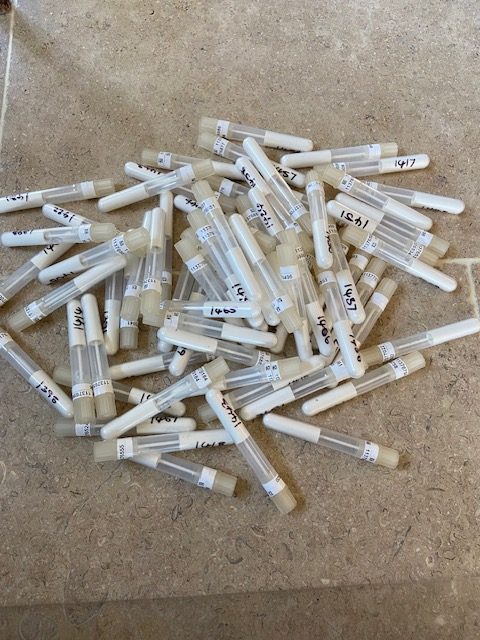
Today we genotyped our entire 2026 lamb crop but why and what is involved?
DNA is collected using a non invasive nasal swab and this is then preserved in a tube which is sent off for analysis.
Information gained from this DNA then provides data into the National Texel Genomic Evaluation that is carried out by the Texel Society. Using DNA information along with other measurements (called phenotypes) the evaluation can then predict with a high level of accuracy what the genetic merit of each lamb is, allowing them to be ranked in order of performance.
This data is valuable because it allows both Paul and buyers to understand those animals that will deliver the best return before they have lambs. This leads to more efficiency and reduces waste and performance surprises.
In addition, health single marker traits are now routinely reported which helps to identify animals that are genetically more resistant to things such as Scrapie, Microphthalmia and Maedi Visna. This means the information can be used to breed healthier sheep.
The Kimbolton flock has worked closely with research projects for two decades and is one of the original members of the Texel Societies Resource Flock initiative. This approach ensures that we stay at the forefront of industry Research and Development (R&D) and can deliver real value in the animals offered for sale.