Its been some very long days and nights but the lambs are happy, healthy and full of life.
Its very enjoyable taking a few moments to enjoy them as they are all growing up so fast. Here are some of our favourite pictures so far!
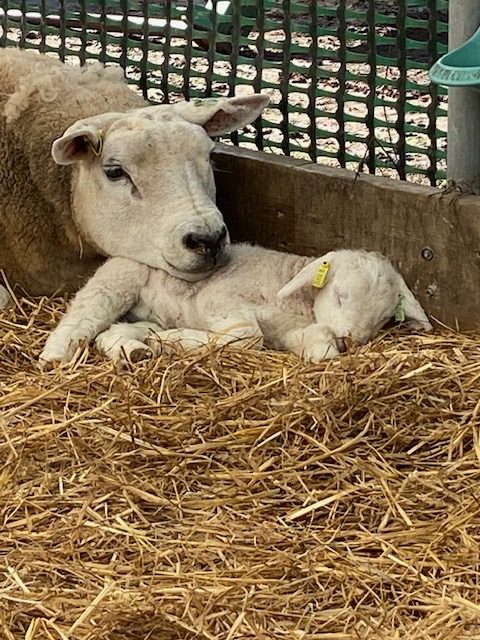
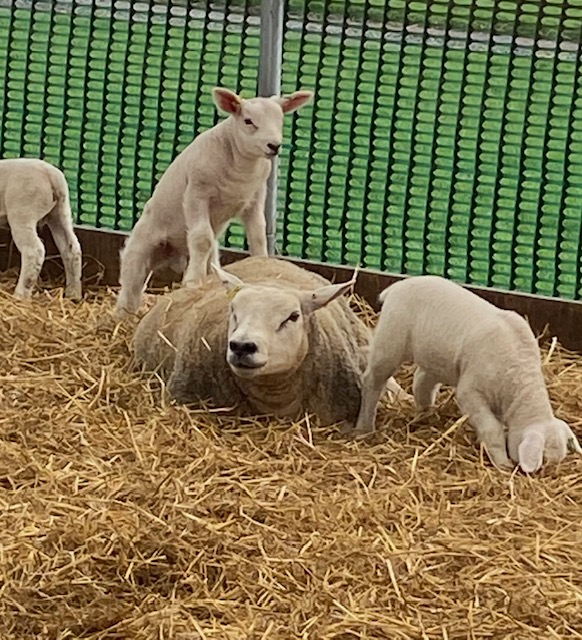
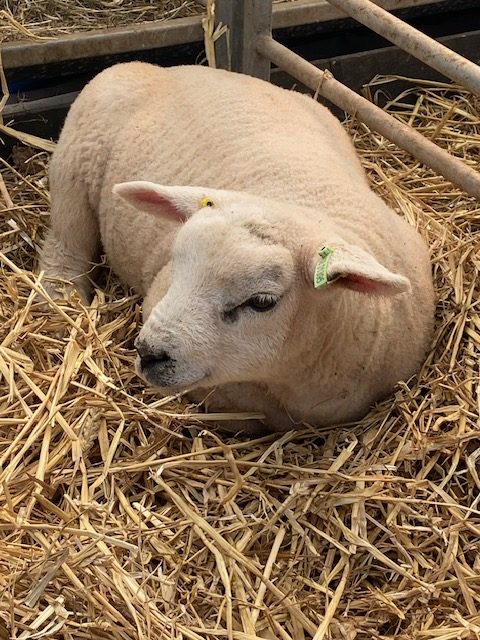
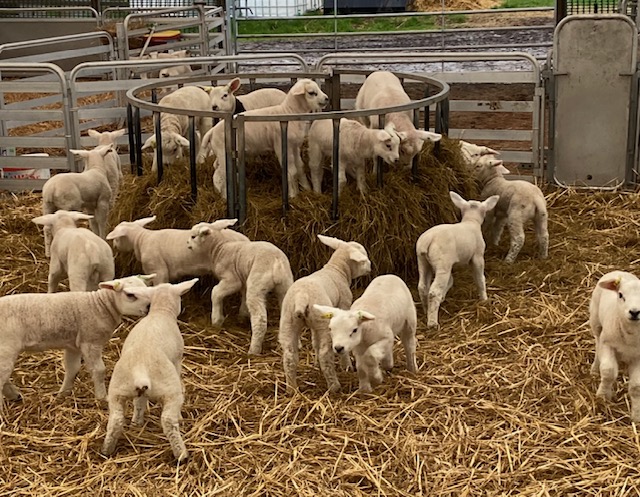
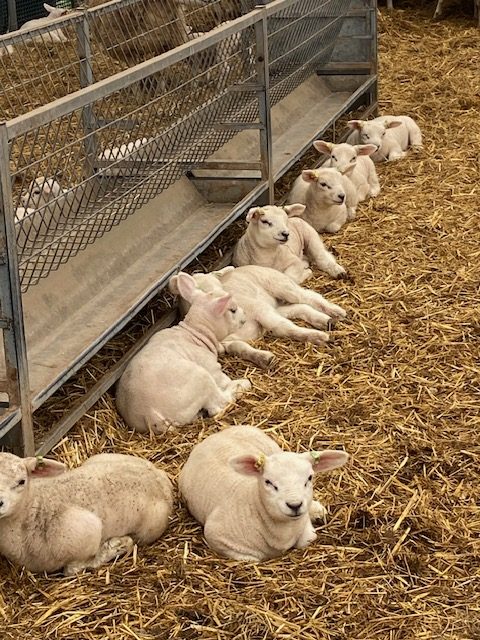
Its been some very long days and nights but the lambs are happy, healthy and full of life.
Its very enjoyable taking a few moments to enjoy them as they are all growing up so fast. Here are some of our favourite pictures so far!
Those of you who know Paul will know that he is keen on data collection and evaluations, using the breeding values created to help make important management decisions.
So in addition to collecting the usual lambing ease, weight and scanning data, Paul has now provided to the Texel Sheep Society for the first time phenotypes for maternal ability and tail length.
It is hoped that these traits can be included in future evaluations so that they can better inform future breeding decisions.
The importance of maternal ability and lambing ease has been discussed in a previous post, however tail docking is something worth talking about as there is an industry debate underway currently.
For centuries, tail docking has been carried out to reduce the risk of fly strike and castration has been undertaken to prevent unplanned pregnancies when running mixed groups of lambs together.
For both tailing and castration the majority of farmers use rubber rings which are applied in the first seven days of life. Whilst this is effective it is not without pain and discomfort for the lamb, with the effects lasting for some time after application. This can affect growth rates as well as introduce wounds that bacteria can colonise and cause issues such as joint ill which are unpleasant for the lamb.
Animal health and welfare is of paramount importance to any farmer and when this is combined with the prospect of greater legislation it means alternative solutions need to be found and used.
So for the last two years Paul has successfully swapped from using a hot iron for tailing to the ClipFitter system. This is a clamp that is placed over the tail (or testicles) which when applied disables all cords and nerves resulting in significantly reduced discomfort for the lamb. Whilst this is more expensive than using rings it is a price worth paying as the lamb behaves normally once applied.
However there is a better natural solution – select rams that have naturally shorter tails as this would remove the need for any physical human intervention.
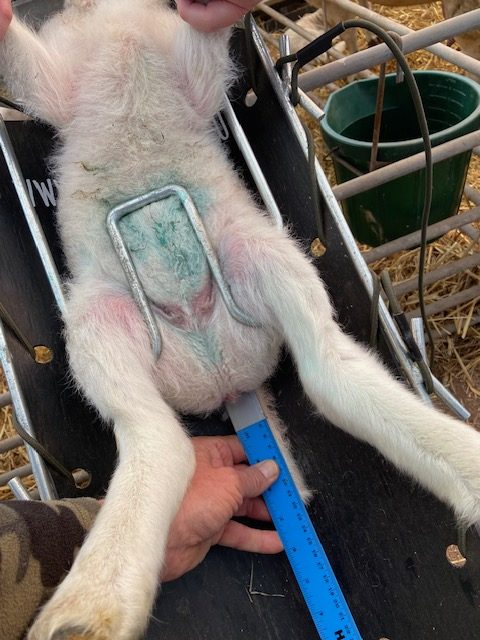
However to produce a breeding value for this many measurements or phenotypes need to be collected. This is undertaken within the first 24 hours of life, whilst other management tasks are done (eg ear tagging, weighing).
The picture below shows this taking place (note the wipe clean tape on the end of the ruler!!).
Lambing has continued at a pace, however the impact of the dry weather during the first tupping cycle in 2025 has meant that the usual 75% of ewes holding was reduced to around 50%.
Consequently this means more will be lambing in the second cycle than we would “normally” expect. This was caused by rain finally falling during the first cycle that made the grass green up, which was very welcomed. However it also means we have five time the number of triplets in the second cycle than the first!
Good mothering ability is critical for us and poor maternal ability is recorded and ewes are always culled from the flock.
We want ewes who lamb naturally, without intervention and who love their lambs! They also need to have plenty of milk and be attentive to their lambs when they are born, as this is critical to the health of the lambs and how they grow on.
Across the UK we have seen far greater use of Embryo Transfer work in Texel’s. This process sub contracts the carrying, birth and care of a lamb to another breed of ewe. If this trend continues over multiple female generations where donor ewes don’t lamb naturally, the selection for maternal traits is lost. This is something we feel is a retrograde step for the breed and is something that buyers should consider when making purchasing decisions.
Embryo transfer can be a great tool if you are trying to replicate a proven ewe who has excellent maternal traits but beware of anyone who solely uses it to produce their sale sheep as they will likely have lost control of the maternal ability of their females.
Fortunately iTexel https://www.itexel.uk/ allows you to see the birth type (embryo or natural) of all progeny and can help you be more informed about what you are buying, hopefully avoiding nasty surprises in the future.
You can be reassured that any Kimbolton sheep offered for sale will not have come from generations and generations of embryo bred sheep and that maternal ability is one of the strict selection criteria applied.
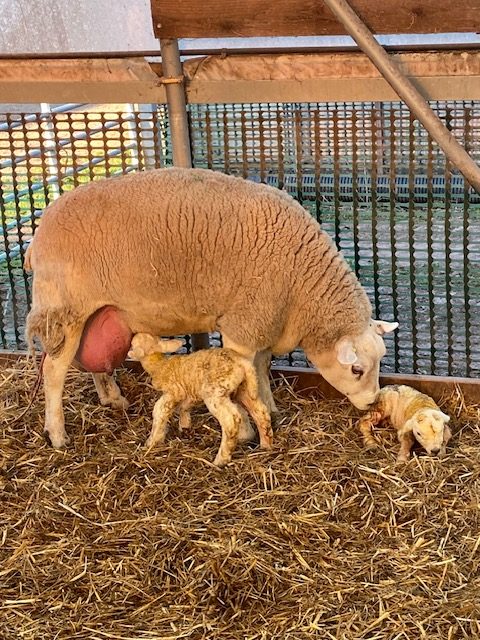
The first of the lambs have arrived a day early, of course we were ready for them!
The gestation length difference between rams is something that fascinates us as it is an important factor that drives lamb survival.
If a ram produces heavier lambs then they can still be born easier if they are born either early or full term. However, if they are born later then they are likely to need more assistance due to the phenomenal growth in the latter stages of pregnancy.
As shepherds we prefer an easy life with minimal intervention as it is easier on both ewe and lamb, therefore we select for easy lambing traits and take gestation length into account when producing our mating plan.
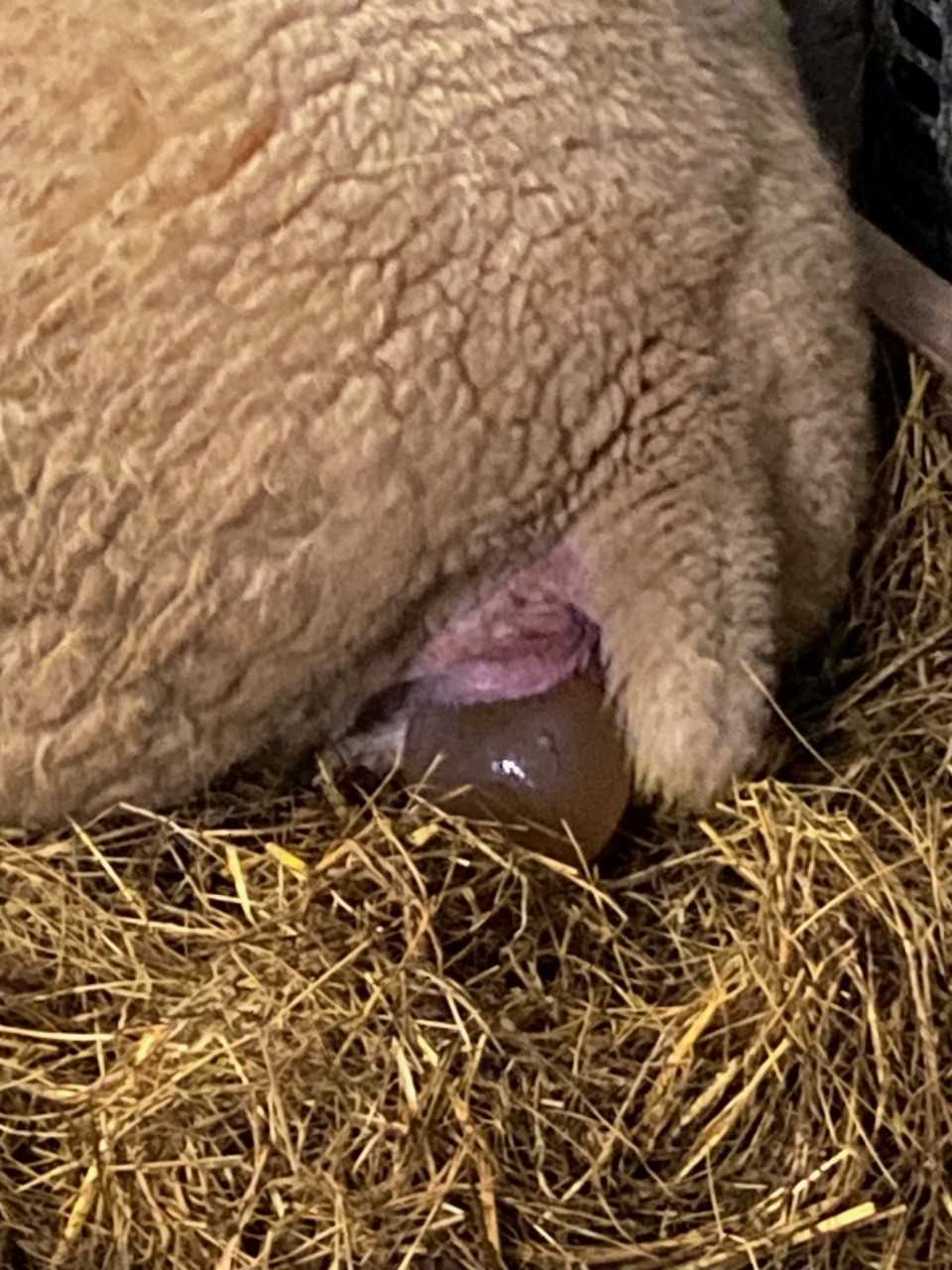
The countdown to lambing is always an exciting time as the success or failure of your breeding decisions become real. Will that “perfect” combination that you had in your head work or be a disaster?
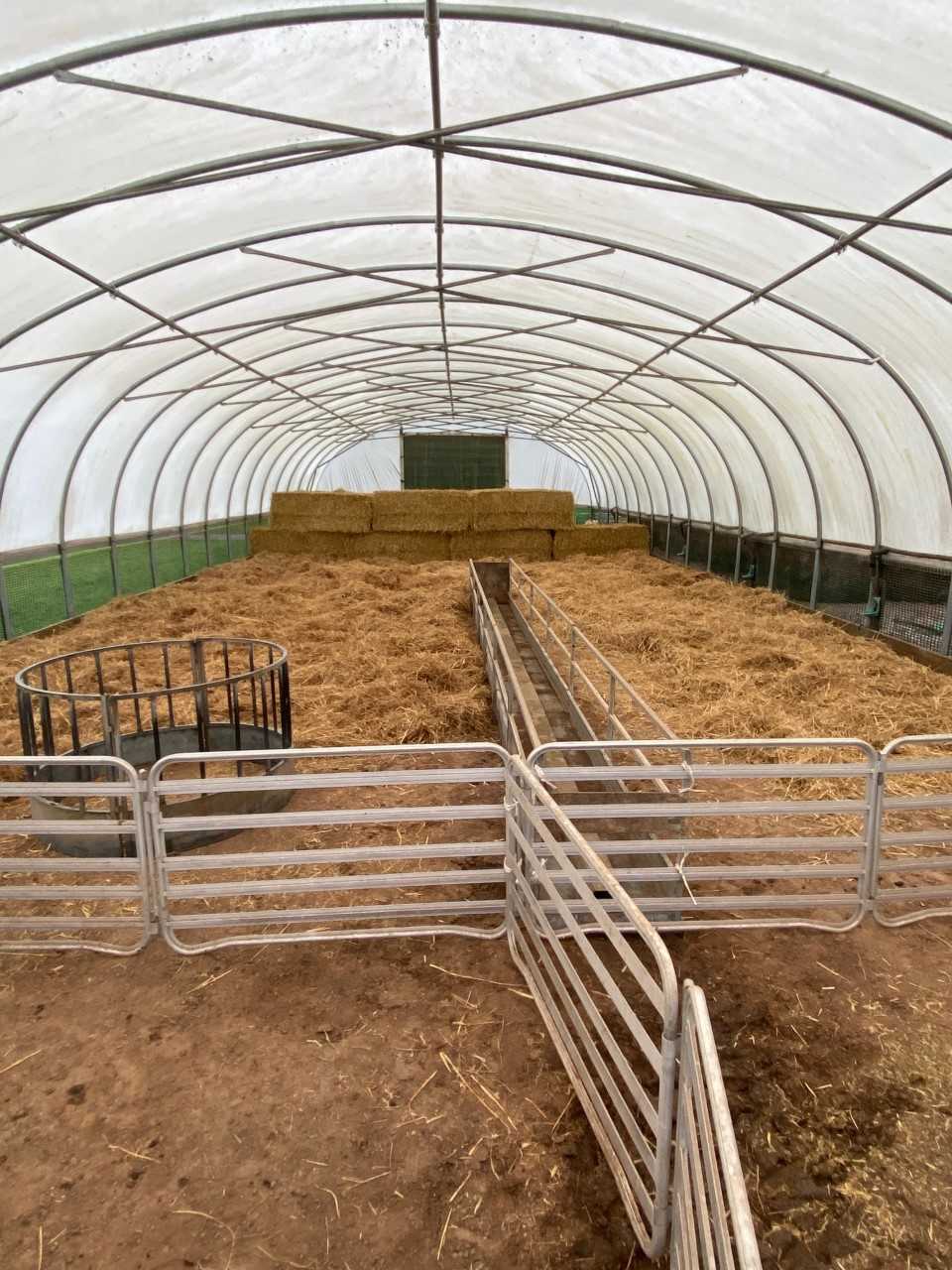
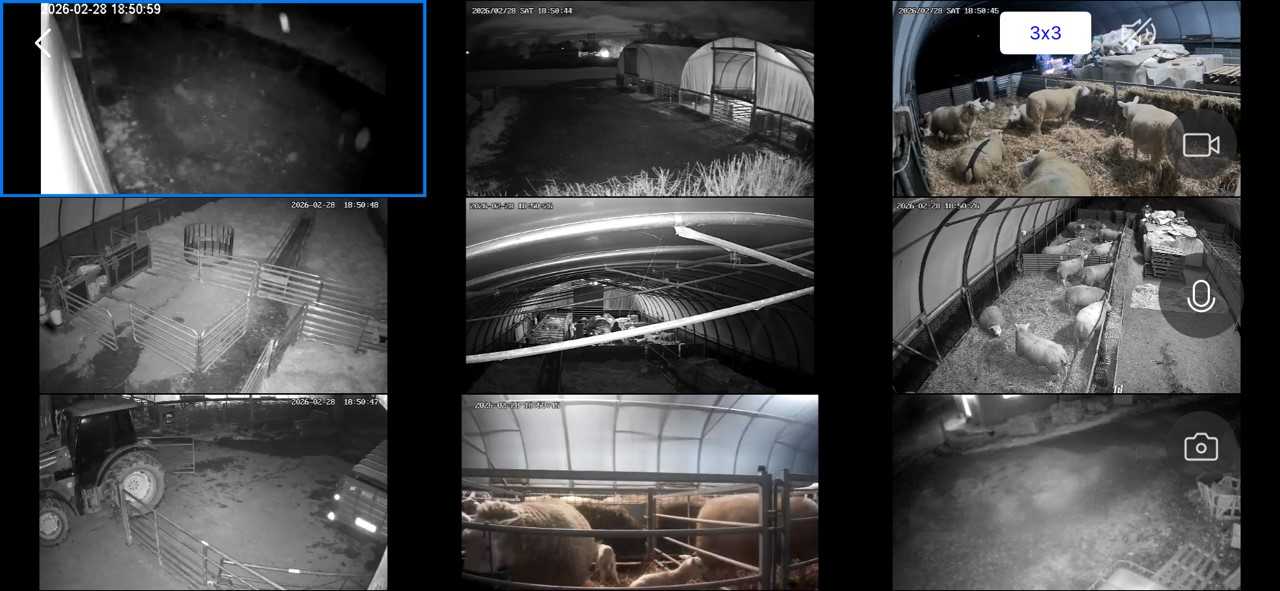
The sheds have been disinfected and filled with sheep and clean straw and we are locked and loaded with night checks and plenty of camera watching underway with the first lambs expected on 1st March!
Below is the maternity barn and the camera view!
After a hectic autumn sale season it was pleasing for the flock to get their animals sold to some great homes representing both existing and new customers.
This year in particular it seemed that the Kimbolton Flocks commercially focused breeding objectives were what people were looking for.
Many people chose to buy direct from farm as this is the best way to see everything for sale, including viewing their families and understanding the system they are produced in. Additonally the flock did enter both National and Club sales across the country to cater for those who were unable to visit the farm or were unaware of us.
Whilst we have sold out of sheep for 2025, we can still help with semen and are happy to discuss your requirements for 2026 as orders are already being taken.
Finally Paul would like to sincerely thank everyone who has shown interest in the flock this year and pass on his best wishes for tupping and lambing.
I am sure you will have read plenty about climate change and the impact livestock have. What ever your views it is important that we all play a role in optimising what we produce so that we can play our part.
To help support this a project funded by AFN Network + (more details below) called “Breeding better beef and sheep: co-designed breeding strategies to achieve net zero” is being undertaken and the Kimbolton Flock was selected as one of the twenty case study farms.
Led by the Royal Agricultural University at Cirencester the projects aim is to help UK beef and sheep farmers reduce greenhouse gas emissions by making better breeding decisions. Currently, many farmers face unclear guidance on how to lower their emissions, slowing any progress considerably.
By reviewing global breeding methods and collecting data from 20 case study farms across the UK, the project aims to identify practical and affordable breeding strategies to cut emissions. To help validate and baseline these strategies each farm undertook a carbon footprint analysis to assess the impact of these breeding changes so any changes are evidence based.
The output from the project will be to develop solutions that practically support farmers in reaching net zero GHG emissions by 2050.
Other project collaborators include Russ Thomas (Hybu Cig Cymru/Meat Promotion Wales), Ed Smith (The Texel Sheep Society), Non Williams (Mentera), Robert Gilchrist (Aberdeen Angus Society), Sarah Miller (Quality Meat Scotland), Shannon McLaughlin (Queen’s University Belfast), Sarah Morgan (Harper Adams University), Shailesh Shrestha (Scottish Rural College), Maud Helwegen (University of Bristol).
Commenting on the flocks involvement Paul said “in a changing world, it is vital that producers are aware of small changes that can easily be made that can have a big cumulative impact over time. I am pleased to be involved with this project to help support establishing best practice and I look forward to seeing the findings”
The AFN Network+ (UKRI Agri-food for Net Zero Network+) brings together more than 3,000 people from across UK agri-food to identify the key research gaps which need to be addressed if we are to reduce emissions in the sector and achieve the UK’s transition towards net zero by 2050.
The Network is a unique collaboration between academics, researchers, third sector organisations, policy makers, and agri-food industry professionals, including farmers and retailers.
Their findings will inform UK Research and Innovation (UKRI) research investments over the next decade.
We are pleased to announce that the list of animals available for sale in 2025 has been added to the “for sale” page.
If you are interested in viewing without obligation please contact Paul to arrange. Sheep will be mainly sold direct from farm but there will be limited consignments sent to key Society and Club sales across the UK.
By viewing them in their home environment you will see the entire offering and also get to understand the system they are produced in and understand our commercial breeding goals. This is something not enough people bother to do, leaving them surprised when their impulse purchase bought at a market from a random stranger doesn’t perform because they have been bred for different reasons usually in a more intensive system.
In the current climate, it is more important than ever to de-risk your purchase. Paul is very experienced in helping buyers do this by combining visual appraisal and the use of the latest genomic breeding values.
Get in touch, what have you got to lose? Well actually quite a lot if you buy the wrong animal for your system!
During 2024 the Texel Sheep Society evolved their genetic evaluation service so that it routinely uses genomic information, a sheep industry first.
This is truly game changing as it now enables information collected from DNA to be used to inform the breeding values calculated instead of just relying on pedigree information which could potentially contain errors.
The Kimbolton flock has collected phenotypes (data) for almost 20 years on traits of key commercial value but now the powerful combination of phenotypes AND genotypes (DNA collected from a nasal swab) unlocks far greater accuracy of the breeding values produced. This effectively means that a ram lamb can now have the same accuracy as a mature ram that has had ~20 progeny. This means breeding decisions can be made more confidently enabling faster rates of genetic gain to be made.
To make the most of this opportunity the flock has collected genotypes from its entire 2025 lamb crop, the good, the bad and the ugly. These have been submitted to the Texel Society to be processed and the results will be included in the latest Blup run which will be uploaded to https://www.itexel.uk/ and published so the results are visible for anyone interested.
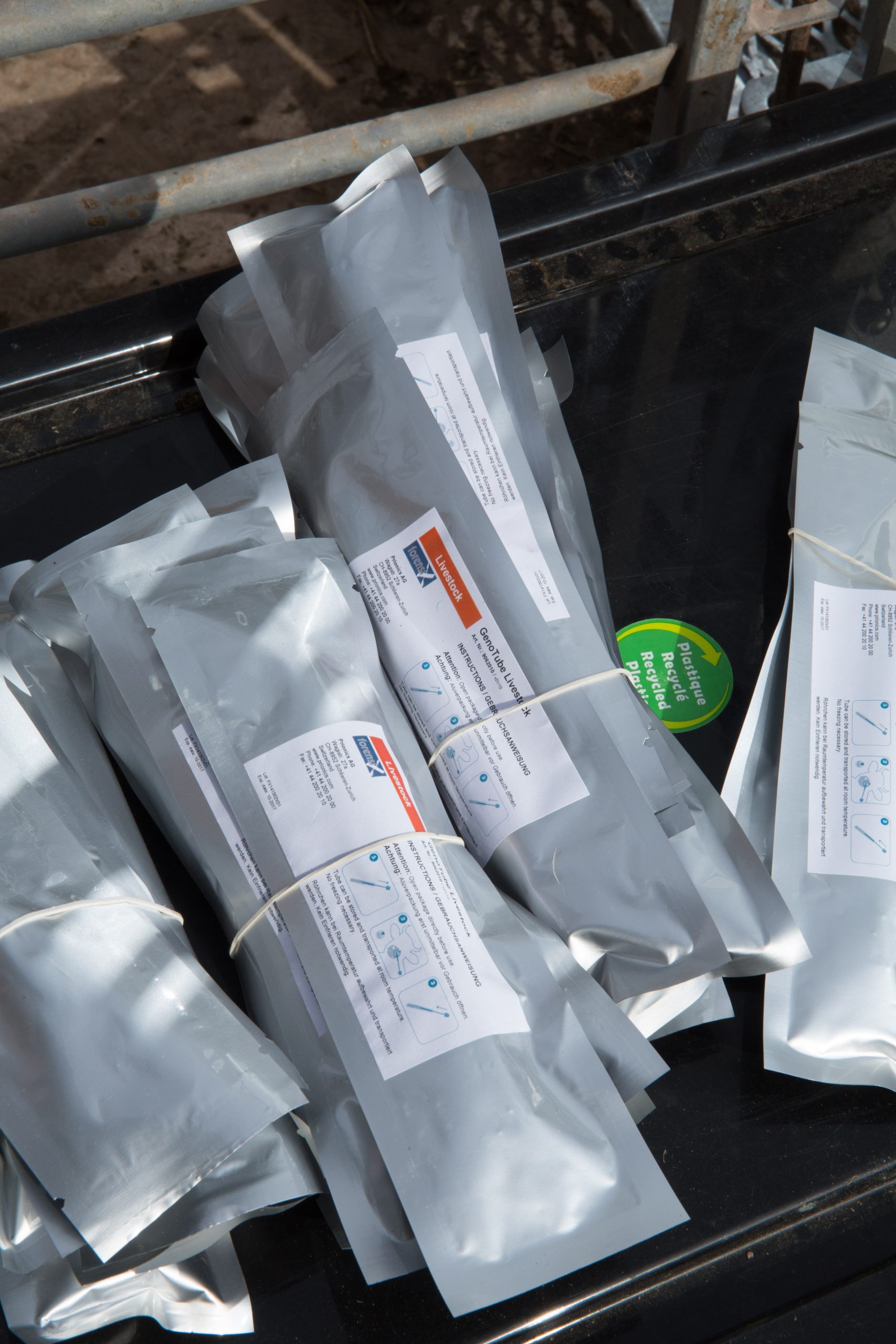
Paul commented “it was quite a time consuming job to collect nasal samples from all the lambs, but I am confident that the time will be repaid when we get the results. The more accurate breeding values gained will benefit my customers as it will further reduce the risk of buying a ram from Kimbolton making sure it “does what it says on the tin” “
Feel free to contact Paul to discuss how genomics can help you de-risk your ram buying decision to ensure you buy the right animal for your needs.
The Kimbolton flock is pleased to welcome the Northern Area Texel Club when they visit on 31st May.
All of the flocks sheep, good bad and ugly will be on display and visitors will get to discuss the breeding goals the flock has as well as getting to understand the commercial system they are produced in.
If you are available on 31st May you are very welcome to come along too, please just contact Paul in advance so that he knows you are coming.
